
Commercial Pressure Washing Guide: The Ultimate Resource for Property Managers
Hey there! Are you ready to ditch the grime and finally get your commercial property looking professionally clean? Whether you’re a property manager dealing with tenant complaints, a business owner wanting to boost your curb appeal, or an in-house maintenance crew looking to upgrade your procedures, you’ve landed in the right spot!
At Tampa Bay Soft Wash & Pressure Cleaning, we created this comprehensive commercial pressure washing guide to share everything we know. First, we want to help you decide if you should tackle the project yourself or hire a professional. Therefore, we’re sharing all of our top tips, tricks, industry secrets, and pricing breakdowns. Let’s dive in!
1. Why Exterior Cleaning is an Investment
Most people think of pressure washing as just a “nice-to-have” cosmetic upgrade. However, it is actually a vital investment! Undoubtedly, it directly affects your property value, your liability, and your bottom line.
- First Impressions Drive Business: Did you know that 95% of shoppers will avoid a store if the exterior looks dirty? In fact, people make judgments about a business within seven seconds of pulling into the lot. Consequently, if they see oil stains and moldy walls, you are actively losing foot traffic.
- Protecting Your Expensive Surfaces: Furthermore, dirt and algae aren’t just ugly; they are actively eating away at your property. For example, mold holds moisture against your stucco, accelerating wear and tear. Meanwhile, regular maintenance extends the life of your exterior surfaces by 15–25%!
- Preventing Slip-and-Fall Lawsuits: Additionally, slippery sidewalks are massive hazards. As a matter of fact,OSHA frequently highlights the dangers of slippery walking-working surfaces, and a single slip-and-fall claim can cost upwards of $30,000 to $50,000. Therefore, documenting a regular cleaning schedule proves you took reasonable steps to keep your property safe.
[Image Placeholder: Insert a photo of a clean storefront here. Image Alt Text: A clean retail storefront featured in our commercial pressure washing guide]
2. Warning Signs Your Property Needs Cleaning Now
Obviously, you shouldn’t wait for your next scheduled cleaning if you are seeing any of the following red flags. Specifically, these are signs that biological growth or contamination has progressed far enough to require immediate attention:
- Spreading oil stains: Over time, oil seeps deeper into asphalt and concrete, compromising the structure.
- Green or black discoloration: Similarly, algae, mold, or mildew taking over building walls and sidewalks.
- Dark streaking: Noticeably, black streaks below joints, gutters, or HVAC units.
- Standing water: Meanwhile, puddles remaining long after a rainfall caused by debris-clogged exterior drains.
- Dumpster odors: Finally, smells emanating from loading docks or dumpster pads (a massive liability for pest control and health codes).
3. Our Commercial Pressure Washing Guide to Surface Cleaning
If you think exterior maintenance just means blasting a parking lot with a high-pressure wand, think again! Because every surface requires a specific approach, using high pressure on the wrong material can cause thousands of dollars in damage.
Soft Washing vs. Pressure Washing: The “Root Kill” Difference
Above all, this is the most important distinction property managers need to know.
- First, pressure washing (2,500–4,000+ PSI) uses high-pressure water to physically blast dirt off hard surfaces like concrete.
- Conversely, soft washing (under 500 PSI) uses low pressure combined with eco-friendly cleaning solutions to safely clean delicate surfaces.
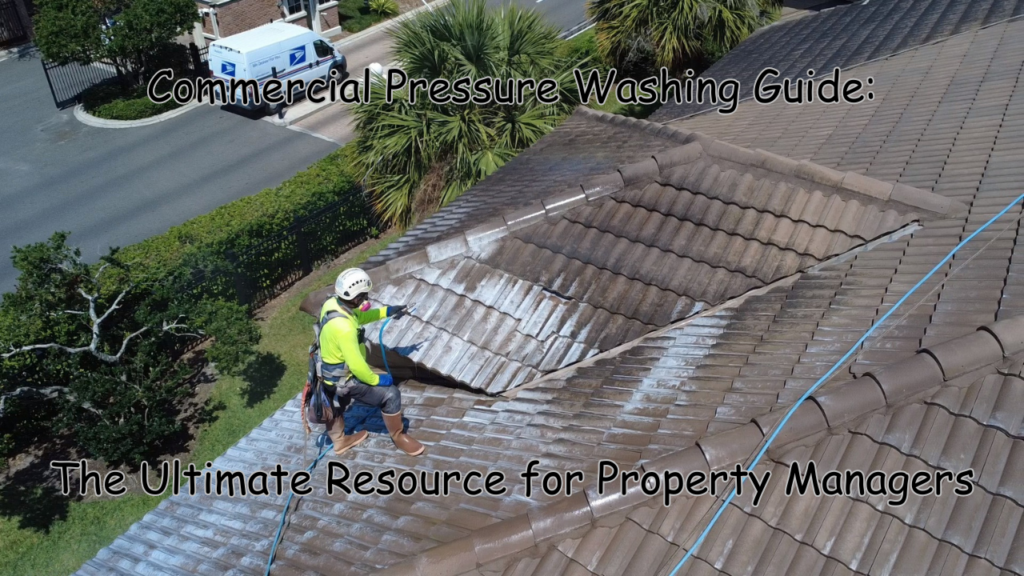
Why it matters: Essentially, pressure washing a moldy wall just blasts the visible top off the growth, leaving the root system alive to grow back quickly. On the other hand, soft washing chemically kills the organism at the root. Then, we rinse it away safely. (Want to learn more? Check out our residential and commercial soft washing services here.)
Parking Lots & Concrete Sidewalks
Undeniably, this is the bread and butter of property maintenance. Because of high traffic, you get a heavy buildup of oil drips, tire marks, and gum. To tackle this, we use professional surface cleaners running at 3,000–4,000 PSI. As a result, this ensures an even clean without leaving those ugly “zebra stripes.” Furthermore, for heavy oil, we pre-treat the concrete with commercial degreasers.
Roofs, Awnings, & Dumpster Pads
Importantly, high pressure will void a commercial roof warranty. Therefore, we solely soft wash roofs and vinyl awnings to restore them to a like-new condition. Similarly, dumpster pads require specialized sanitization. Consequently, monthly cleaning with heavy degreasers keeps the health inspector happy and keeps pests away! Additionally, we handle specialty areas like drive-through lanes, parking garages, and high-pressure graffiti removal.
4. The Golden Rule: Maintenance Schedules
“How often should I be cleaning my property?” Admittedly, we get this question constantly! As noted throughout this commercial pressure washing guide, consistency is key. Here is a solid baseline schedule:
- Retail Centers: Wash parking lots quarterly, sidewalks monthly, and the building exterior twice a year.
- Restaurants/Food: Wash dumpster pads weekly, and sidewalks weekly or monthly.
- Office Parks & HOAs: Wash concrete sidewalks and lots quarterly, and soft wash the building exterior once a year.
🌴 Quick Tip for Humid Climates: Especially here in Florida, high humidity means mold grows fast. Therefore, you should schedule your major washes right after spring pollen season ends!
5. The Florida Property Manager’s Survival Guide
If you manage properties in Pinellas, Hillsborough, or Pasco County, the climate creates unique challenges. Consequently, this requires a specific approach:
- Coastal Salt Air: For instance, properties near the Gulf or Tampa Bay face salt air that accelerates corrosion on metal surfaces. As a result, coastal properties require more frequent washing to counteract this.
- The Summer Rainy Season (Drain Nightmares): Moreover, the daily 4 PM downpours are brutal. If your commercial drains and scuppers are clogged with leaves and dirt, your parking lot quickly becomes a lake. To prevent this, we highly recommend our high-pressure drain cleaning services right before the summer storms hit.
Your Year-Round Maintenance Calendar
To keep things on track, here is your seasonal schedule:
- March – April: First, execute pre-season parking lot and sidewalk cleaning.
- May – June: Next, schedule comprehensive exterior cleaning (facades, lots, sidewalks) after pollen season ends. Also, execute high-pressure drain cleaning on all exterior lines.
- July – August: Then, utilize soft wash treatments on shady areas showing rapid mid-summer biological growth.
- September – October: Afterward, book a post-rainy-season comprehensive cleaning to address water staining and debris.
- November – December: Finally, handle entryways and storefront touch-ups before the holiday shopping rush.
6. EPA Regulations & Environmental Compliance
Surprisingly, this is the section most DIY guides skip. Unfortunately, it’s the exact oversight that catches property managers off guard and can cost your business a fortune!
For example, let’s paint a picture: You have a maintenance worker—or you hire the cheapest pressure washing guy in town—blast away heavy oil stains. Subsequently, a river of black, sludgy wastewater flows right down the curb and disappears into the municipal storm drain.
However, what you might not realize is that storm drains lead directly to our local waterways, not to water treatment plants. According to the EPA’s Clean Water Act, allowing contaminated wash water into a storm drain is considered an illegal discharge. As a result, fines can hit up to $50,000 per day!
How to Actually Stay Compliant (The Real-World Solutions)
Fortunately, the golden rule of environmental compliance is simple: do not let the wash water enter the storm drain. While some extreme situations require a full vacuum recovery system, professional exterior cleaners utilize several practical, legal workarounds:
- Drain Blocking & Plugging: Specifically, we use heavy-duty drain covers, berms, or inflatable drain plugs to barricade the storm grates. Thus, this physically prevents any wastewater from entering the municipal system.
- Evaporation: Alternatively, for smaller jobs, we can barricade the runoff into a designated puddle. Then, we simply allow the sun to evaporate the standing water.
- Diversion to Landscaping: Additionally, when using safe formulas, runoff can often be legally diverted into adjacent soil. Here, the earth acts as a natural filter.
- Sanitary Sewer Discharge: Unlike storm drains, sanitary sewers do go to water treatment plants. Therefore, with the proper local permits, wastewater can sometimes be redirected into a sanitary cleanout.
- Vacuum Recovery: Lastly, for high-contamination areas like dumpster pads, we deploy vacuum systems to suck up the blocked water.
Ultimately, at Tampa Bay Soft Wash, we handle all the wastewater barricading and recovery protocols. Because of this, our commercial clients never have to stress about EPA fines!

7. DIY vs. Hiring a Pro Exterior Cleaner
Of course, we are all for a good DIY project! If your maintenance crew has the time to invest in commercial-grade gear, go for it. However, the gap between a rented consumer-grade machine and a professional setup is massive.
Therefore, if you decide to hire out, do not hire the cheapest option. Instead, ask these crucial questions:
- “Do you have adequate insurance?” Obviously, ask for their certificate! Commercial washing requires a $1 million general liability minimum.
- “Do you offer Soft Washing?” If they plan to hit your delicate stucco or roof with 4,000 PSI, find someone else.
- “What is your stormwater compliance plan?” Otherwise, if they give you a blank stare, they are putting your business at risk for that massive EPA fine.
8. Expected Costs and Pricing Breakdown
While every job requires an exact measurement, we want to provide some realistic baseline numbers in this commercial pressure washing guide. Consequently, you will know what to expect.
- Generally, parking lots and concrete run between $0.08 – $0.25 per square foot.
- On the other hand, building exteriors usually cost $0.15 – $0.40 per square foot. This is due to the complexity of the equipment and solutions needed.
Money-Saving Tip: Furthermore, if you bundle services together, such as getting your windows, gutters, and sidewalks cleaned at once, you can often save 20-30% on the total contract!
9. Frequently Asked Questions (FAQ)
Can pressure washing damage my property?
Yes, absolutely. In fact, using high pressure on stucco, vinyl siding, asphalt shingles, or older painted surfaces can cause expensive damage. For this reason, hiring a contractor who understands the science of soft washing is vital.
How do I prepare for a commercial exterior cleaning?
Simply notify your tenants in advance regarding parking or access changes. Next, move any vehicles or outdoor furniture away from the building. Finally, ensure our crew has access to exterior water connections. Then, we will handle the rest!
The Bottom Line
In conclusion, commercial exterior cleaning isn’t overly complicated. However, it does require treating it as a regular maintenance program rather than an emergency fix. Ultimately, consistent cleaning protects your investment, keeps your tenants happy, and ensures your property is always putting its best foot forward.
Hopefully, this commercial pressure washing guide gave you the confidence to get your property shining again!
Did this guide help you?
👍 Give us a **like** on Facebook and follow @tbsoftwash on social media for more professional cleaning tips!
📍 For expert soft washing & pressure cleaning services in Tampa Bay, visit www.tbsoftwash.com or contact us!