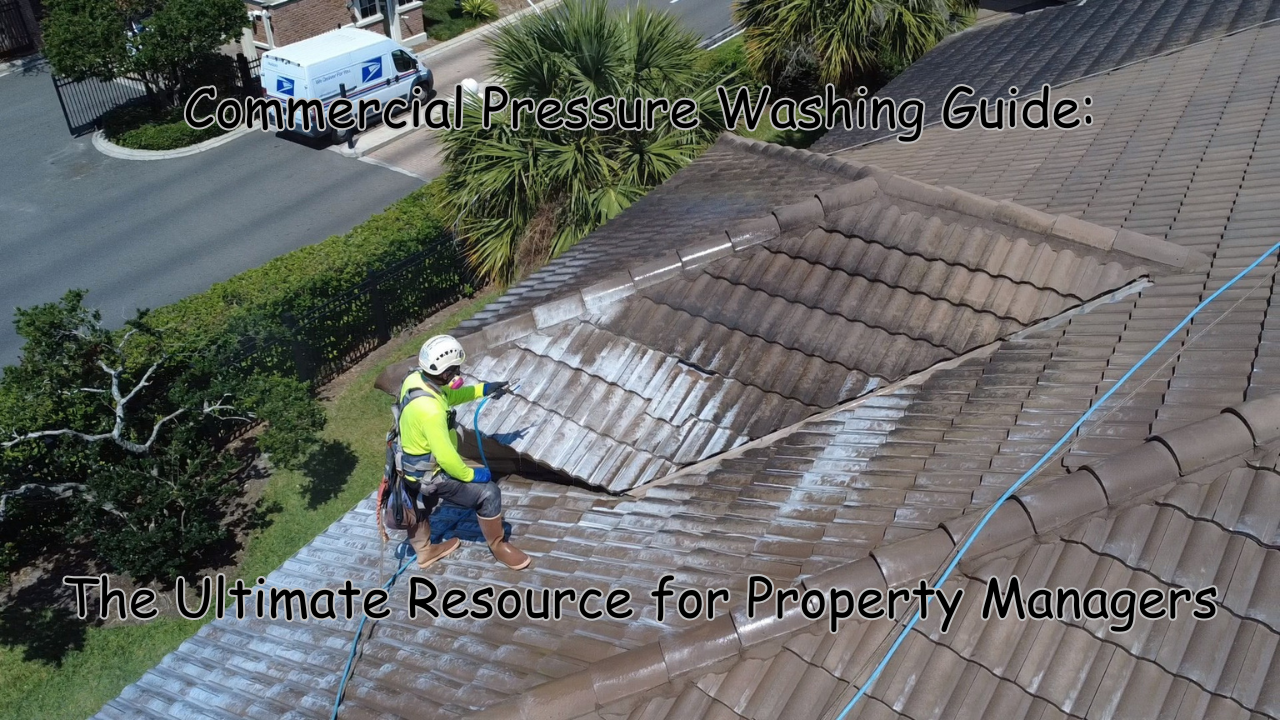
Maintaining a massive commercial property can feel overwhelming, especially when biological growth, oil stains, and gum threaten your curb appeal and safety compliance. We’ve compiled the ultimate guide for property managers to understand the correct exterior cleaning methods without risking property damage or EPA fines. For seamless commercial maintenance, partner with Tampa Bay Soft Wash in Clearwater, FL.
At Tampa Bay Soft Wash & Pressure Cleaning, we created this comprehensive commercial pressure washing guide to share everything we know. First, we want to help you decide if you should tackle the project yourself or hire a professional. Therefore, we’re sharing all of our top tips, tricks, industry secrets, and pricing breakdowns. Let’s dive in!
Why Exterior Cleaning is an Investment
Most people think of pressure washing as just a “nice-to-have” cosmetic upgrade. However, it is actually a vital investment! Undoubtedly, it directly affects your property value, your liability, and your bottom line.
- First Impressions Drive Business: Did you know that 95% of shoppers will avoid a store if the exterior looks dirty? In fact, people make judgments about a business within seven seconds of pulling into the lot. Consequently, if they see oil stains and moldy walls, you are actively losing foot traffic.
- Protecting Your Expensive Surfaces: Furthermore, dirt and algae aren’t just ugly; they are actively eating away at your property. For example, mold holds moisture against your stucco, accelerating wear and tear. Meanwhile, regular maintenance extends the life of your exterior surfaces by 15–25%!
- Preventing Slip-and-Fall Lawsuits: Additionally, slippery sidewalks are massive hazards. OSHA frequently highlights the dangers of slippery walking-working surfaces, and a single slip-and-fall claim can cost upwards of $30,000 to $50,000. Therefore, documenting a regular cleaning schedule proves you took reasonable steps to keep your property safe.
Warning Signs Your Property Needs Cleaning Now
Obviously, you shouldn’t wait for your next scheduled cleaning if you are seeing any of the following red flags. Specifically, these are signs that biological growth or contamination has progressed far enough to require immediate attention:

- Spreading oil stains: Over time, oil seeps deeper into asphalt and concrete, compromising the structure.
- Green or black discoloration: Algae, mold, or mildew taking over building walls and sidewalks.
- Dark streaking: Black streaks below expansion joints, gutters, or HVAC units.
- Standing water: Puddles remaining long after a rainfall caused by debris-clogged exterior drains.
- Dumpster odors: Smells emanating from loading docks or dumpster pads (a massive liability for pest control and health codes).
Our Commercial Pressure Washing Guide to Surface Cleaning
If you think exterior maintenance just means blasting a parking lot with a high-pressure wand, think again! Because every surface requires a specific approach, using high pressure on the wrong material can cause thousands of dollars in damage.
Soft Washing vs. Pressure Washing: The “Root Kill” Difference
Above all, this is the most important distinction property managers need to know:
- Pressure Washing (2,500–4,000+ PSI): Uses high-pressure water to physically blast dirt off hard surfaces like concrete.
- Soft Washing (Under 500 PSI): Uses low pressure combined with targeted cleaning solutions to safely sanitize delicate surfaces.
- Why It Matters: Pressure washing a moldy wall just blasts the visible top off the growth, leaving the root system alive to grow back quickly. On the other hand, soft washing chemically kills the organism at the root before we rinse it away safely.
Parking Lots & Concrete Sidewalks
Because of high traffic, commercial flatwork accumulates a heavy buildup of oil drips, tire marks, and gum. To tackle this, we use professional rotary surface cleaners running at 3,000–4,000 PSI. This ensures an even clean without leaving ugly “zebra stripes.” Furthermore, for heavy oil, we pre-treat the concrete with commercial degreasers (see our Commercial Drive-Thru Degreasing Guide).
Roofs, Awnings, & Dumpster Pads
High pressure will void a commercial roof warranty. Therefore, we exclusively soft wash roofs and vinyl awnings to restore them to a like-new condition. Similarly, dumpster pads require specialized sanitization—monthly cleaning with heavy degreasers keeps the health inspector happy and keeps pests away! Additionally, we handle specialty areas like drive-thru lanes, parking garages, and high-pressure graffiti removal.
The Golden Rule: Maintenance Schedules
“How often should I be cleaning my property?” We get this question constantly! Consistency is key. Here is a solid baseline schedule:
- Retail Centers: Wash parking lots quarterly, sidewalks monthly, and the building exterior twice a year.
- Restaurants / Food Service: Wash dumpster pads weekly or bi-weekly, and sidewalks/drive-thrus bi-weekly or monthly.
- Office Parks & HOAs: Wash concrete sidewalks and lots quarterly, and soft wash the building exterior once a year.
🌴 Quick Tip for Humid Climates: Here in Florida, high humidity means mold grows fast. Schedule your major property-wide washes right after spring oak pollen season ends!
The Florida Property Manager’s Survival Guide
If you manage properties in Pinellas, Hillsborough, or Pasco County, the climate creates unique challenges that require a specific approach:
- Coastal Salt Air: Properties near the Gulf or Tampa Bay face salt air that accelerates corrosion on metal surfaces, requiring more frequent freshwater and low-pressure washing.
- The Summer Rainy Season (Drain Nightmares): Daily 4 PM summer downpours are brutal. If your commercial drains and scuppers are clogged with leaves and dirt, your parking lot quickly becomes a lake. To prevent this, we recommend high-pressure drain jetting right before the summer storms hit.
Your Year-Round Maintenance Calendar
- March – April: Execute pre-season parking lot and sidewalk cleaning.
- May – June: Schedule comprehensive exterior cleaning (facades, lots, sidewalks) after pollen season ends, and hydro-jet exterior storm/French drain lines.
- July – August: Utilize targeted soft wash treatments on shaded walkways and north-facing walls showing rapid mid-summer algae growth.
- September – October: Book a post-rainy-season comprehensive cleaning to address storm staining and organic debris.
- November – December: Handle entryways, drive-thrus, and storefront touch-ups before the holiday shopping and winter visitor rush.
EPA Regulations & Environmental Compliance
This is the section most DIY guides skip—and it’s the exact oversight that catches property managers off guard. If a contractor blasts heavy petroleum oil stains and allows a river of black, sludgy wastewater to flow down the curb into the municipal storm drain, both the contractor and property owner face serious exposure.
Storm drains lead directly to our local Tampa Bay waterways, not to water treatment plants. Under the EPA Clean Water Act and municipal NPDES ordinances, allowing contaminated wash water into a storm drain is an illegal non-stormwater discharge, carrying fines up to $50,000 per day.
How to Stay Compliant (Real-World Solutions)
The golden rule of environmental compliance is simple: do not let contaminated wash water enter the storm drain. Professional exterior cleaners utilize five practical controls:
- Drain Blocking & Plugging: Heavy-duty drain covers, berms, or inflatable drain plugs barricade storm grates to physically prevent wastewater from entering the municipal system.
- Controlled Evaporation: For smaller flatwork areas, runoff is berms-contained in a low spot to evaporate safely.
- Diversion to Pervious Landscaping: When using biodegradable, non-hazardous solutions, neutralized rinse water can be diverted into adjacent pervious soil/mulch beds where the earth acts as a natural bio-filter.
- Sanitary Sewer Discharge: Where permitted, recovered grease/oil wash water is routed to a grease interceptor or sanitary cleanout leading to a treatment plant.
- Sludge & Vacuum Recovery: For high-contamination areas like dumpster pads, venturi sludge extractors (Suttner ST-36 Sludge Sucker) or vacuum recovery systems extract the blocked effluent.
At Tampa Bay Soft Wash, we handle all wastewater barricading and recovery protocols so our commercial clients never have to stress about stormwater compliance.
DIY vs. Hiring a Pro Exterior Cleaner
The gap between a consumer-grade machine and a commercial soft wash and hot-water surface-cleaning rig is massive. If you decide to hire a commercial contractor, ask these three non-negotiable questions:
- “Do you carry at least $1M in commercial general liability insurance?” Always request their Certificate of Insurance (COI) and W-9 (view our verified credentials and $1M policy here).
- “Do you use dedicated Soft Washing on building envelopes and roofs?” If they plan to hit your EIFS stucco, awnings, or roof with 4,000 PSI, walk away immediately.
- “What is your stormwater containment plan?” If they give you a blank stare, they are putting your property at risk for municipal code violations.
Expected Costs and Pricing Breakdown
While every commercial property requires an exact square-footage measurement, here are realistic Tampa Bay baseline ranges:
- Parking Lots & Concrete Flatwork: Typically $0.08 – $0.25 per square foot depending on oil/gum density and frequency.
- Building Exteriors & Stucco Facades: Typically $0.15 – $0.40 per square foot depending on height, lift access, and chemical dwell requirements.
- Money-Saving Tip: Bundling recurring services (sidewalks, dumpster pads, windows, and annual building/roof soft washing) on a quarterly or monthly Maintenance Service Agreement typically saves 20–30% off one-time dispatch rates.
Frequently Asked Questions (FAQ)
Can pressure washing damage my commercial property?
Yes, absolutely. Using high pressure on stucco, vinyl siding, asphalt shingles, barrel tile, or painted surfaces causes irreversible etching and water intrusion. Hiring a contractor trained in low-pressure soft washing is vital.
How do I prepare for a commercial exterior cleaning?
Simply notify your tenants in advance regarding parking or walkway access windows, ensure vehicles or patio furniture are cleared from the work zone, and confirm our crew has access to exterior water spigots—we handle the rest!
The Bottom Line
Commercial exterior cleaning works best when treated as a predictable, scheduled maintenance program rather than an emergency fix. Consistent cleaning protects your capital asset, keeps tenants and inspectors happy, and ensures your property always puts its best foot forward.
👍 Did this guide help you?
Give us a like on Facebook and follow @tbsoftwash on Instagram, YouTube, TikTok, and Twitter for more professional cleaning tips!
📍 For expert soft washing & pressure cleaning in Tampa Bay, visit tbsoftwash.com or contact us for a free estimate!