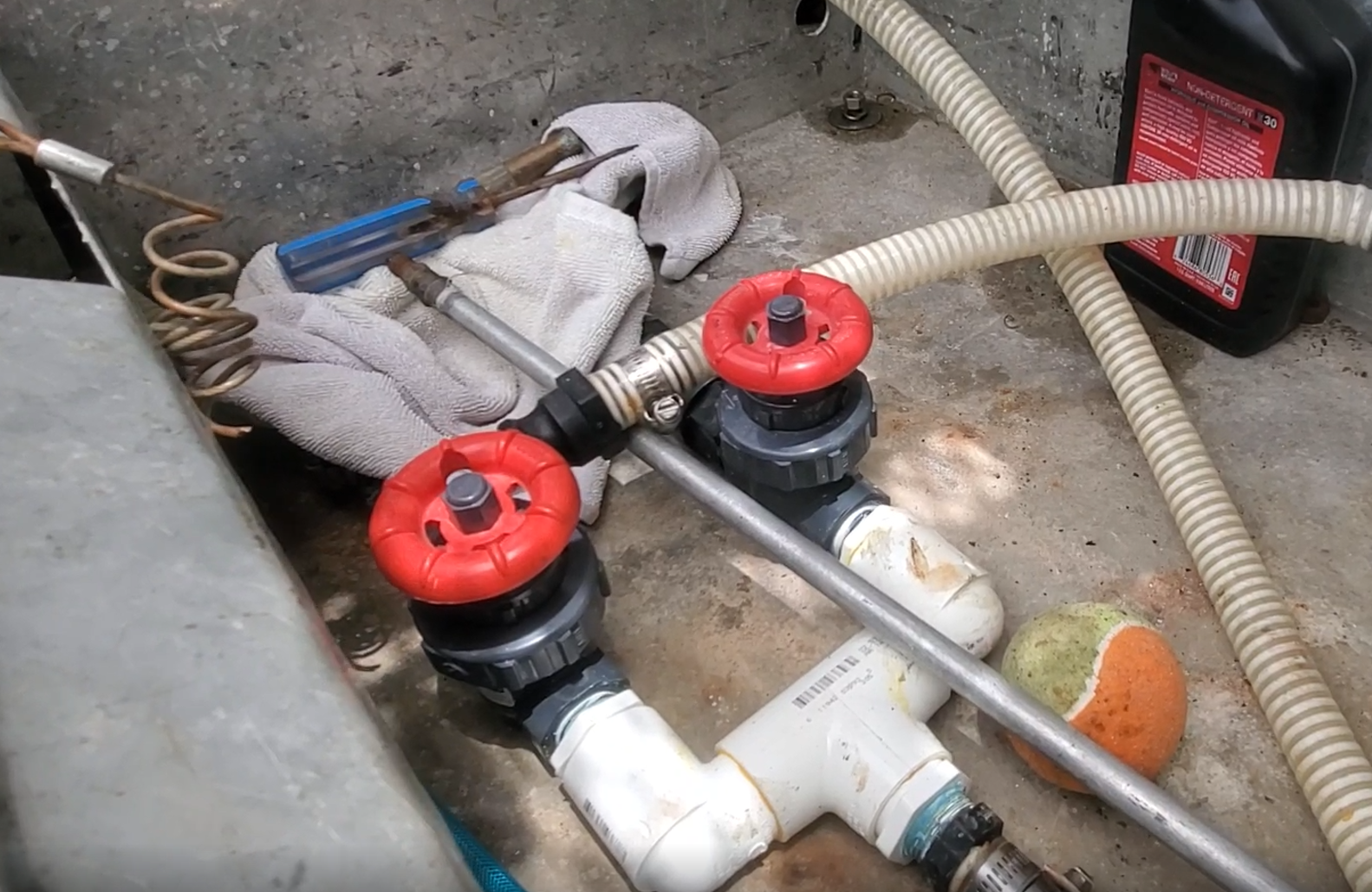
Dialing in the perfect chemical ratio is critical for destroying algae without damaging delicate siding or landscaping. In this article, I’ll show you how to build a custom blend manifold that guarantees precise chemical control and maximum suction for your soft wash system. If you'd prefer to leave the mixing to the pros, Tampa Bay Soft Wash provides top-tier exterior cleaning services throughout Clearwater, FL.
A manifold mixes or blends together multiple liquids at different ratios. I don’t want to beat a dead horse, so I won’t explain how to assemble the actual manifold. Just know that you can use whatever fittings you like to assemble the manifold. The same concept applies whether you use regular old schedule 40 PVC, schedule 80 PVC, or polypropylene fittings.
I want to share what I have learned after building a few. Believe it or not, I have settled on the above pictured design for now. Not because it is the most efficient, but because it was convenient for a multitude of reasons.
Consider The Following Plumbing Concepts
Consider the following plumbing concepts when designing a blend manifold. The bigger the fittings and hoses, the better. 90-degree angles are bad because of flow restriction, especially when trying to operate the blend manifold through suction. All metering valves have a design flaw. Continue reading for my solutions!
The Bigger, The Better
The bigger the hose and fittings, the better due to friction loss. The majority of blend manifolds on the market today are designed with 1/2″ fittings. I suggest spending the extra cash and going with 3/4″ or even 1″. All 5 GPM (and up) pumps utilize 3/4″ ports. The number one issue to consider when plumbing a soft wash pump is to make sure the flow is not restricted or drawing from too far away. Pumps only have so much suction power to draw. I suggest that 1/2″ fittings and hoses are restricting the flow more than what these pumps were designed for, especially when you factor in the check valves.
Avoid 90-Degree Angles
The majority of mixing valves are designed to function with the force from incoming water pressure and air pressure. That is why they don’t mind utilizing 90-degree angles. 90-degree angles are bad because of friction loss and flow restriction, especially if you are operating the blend manifold through suction. Sweeping your 90-degree angles with 2x 45-degree fittings would be a major increase in reducing friction loss. Sucking liquid around 2x 45-degree angles is much easier than sucking liquid around a single 90-degree angle. Likewise, sucking liquid through a 1/2″ straw versus a 3/4″ straw is significant…

I see a lot of unnecessary 90-degree elbows/nipples. I suggest removing those unnecessary 90’s and sweeping the hose instead.
Metering Valve Design Flaw
Metering valves are designed to attach a number to the amount of liquid that is being allowed to flow through. I suggest that the number varies on numerous factors. Just because you plumbed in your metering valves and have both the water and chlorine valves fully open does not mean you are going to have a 50/50 mix. The length of the lines, the route of the lines, and the gravity of the liquids all become factors when determining what ratio you are actually getting…
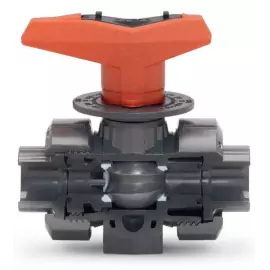
What most people overlook is the fact that metering valves, even when fully open, still restrict the flow of liquid. Metering valves, by design, are restrictive to meter the liquid. 1/2″ metering valves open as wide as a normal 3/8″ gate or ball valve.
The most commonly used valves for metering in the soft wash industry are GF Metering Valves. Above is a cross-section illustrating the internal restriction.
Gate Valves
My solution: Gate valves. Gate valves can incrementally open (unlike ball valves) and when they are fully open, they do not restrict any flow. A 3/4″ gate valve has a full 3/4″ orifice when fully opened. I specifically use the 3/4″ Spears PVC Gate Valve with a non-rising stem and Viton O-ring.
We hope this guide provided valuable insights and tips to help you whether you are just starting out or looking to enhance your existing setup. Hopefully these tips can help create a reliable and efficient blend manifold.
🎓 Go Deeper: System Setup & Hardware
Master proportioner systems, metering valve calibration, and manifold design in our free Academy course.
Start Learning → academy.tbsoftwash.com👍 Did this guide help you?
Give us a like on Facebook and follow @tbsoftwash on Instagram, YouTube, TikTok, and Twitter for more professional cleaning tips!
📍 For expert soft washing & pressure cleaning in Tampa Bay, visit tbsoftwash.com or contact us for a free estimate!